
This debate comes up more than you'd expect. Someone asks which hoodie to buy and the answer they get is usually some version of "it depends on your style." That's not particularly useful. So here's an actual breakdown based on how each one performs in real situations.
Key Takeaways
- A pullover hoodie is warmer than a zip-up of the same fabric weight because the sealed front eliminates the zipper gap and any resulting draft.
- A zip-up wins on versatility and can be worn fully open, half-zipped, or closed, making it easier to manage temperature across different environments.
- If you can only own one, your daily routine determines the answer: primarily outdoors in cold weather favors the pullover, while moving between heated spaces favors the zip-up.
What Is the Core Difference Between a Pullover and Zip-Up Hoodie?
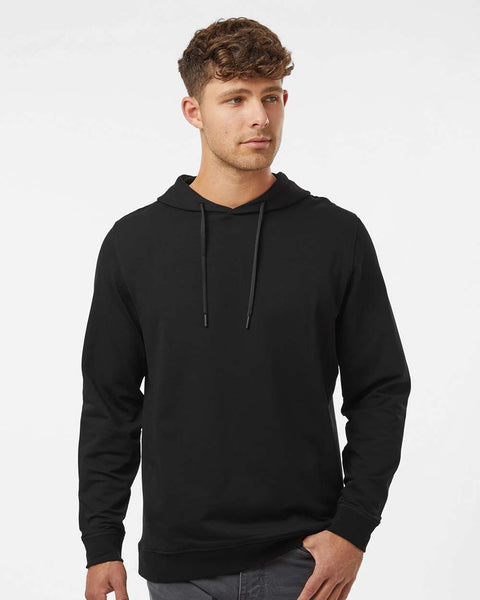
A pullover hoodie has no opening down the front. You pull it over your head, it sits sealed at the front, and that's how it stays. A zip-up hoodie has a full-length zipper that lets you open or close the front as needed.
That single design difference creates a cascade of practical consequences for warmth, versatility, and the situations where each one actually works. Neither is objectively better. They're built for slightly different use cases.
Which Is Warmer: Pullover or Zip-Up?
If staying warm is your primary goal, the pullover is the better choice. There's no zipper gap. The front of the hoodie is a continuous piece of fabric, which means no cold air channeling up through a zipper opening, no metal teeth conducting cold, and no zipper failing to stay zipped when you're moving around.
On a cold day, even a well-made zipper creates a noticeable draft. You end up holding the front closed or keeping your hand near the zipper, which defeats the purpose. The pullover just sits there and does its job without asking anything of you.
For anyone wearing a hoodie as a primary outer layer in genuinely cold weather, the pullover is warmer for the same fabric weight. It's not even a close comparison.
Which Is More Versatile for Everyday Wear?
The zip-up hoodie is harder to beat for adaptability throughout the day. You can wear it fully zipped as a jacket, half-zipped as a layering piece, or fully open over a t-shirt or button-down. That range of configurations makes it work in more situations.
Say you're commuting to work. It's cold in the morning, warm by afternoon. A zip-up hoodie lets you open it up when you get inside without having to take it off entirely. You can drape it open over a clean shirt and it reads as intentional rather than sloppy. A pullover in the same situation means you're either sweating with it on or doing the awkward full removal.
The zip-up also works better as an open layer over a collared shirt or button-down. You can show what's underneath. A pullover worn open-style over a shirt is not a thing that works.
Style Differences
Pullovers tend to read more casual-cool. There's something cleaner about the front of a pullover because there's nothing breaking up the fabric. If you're going for a relaxed, off-duty look, the pullover is more effortless.
Zip-ups have a slightly more functional, athletic aesthetic. They look like you might be on the way to or from something. That's not a negative, it's just a different vibe. For a lot of guys, the zip-up is their default because it's so practical, but it doesn't have quite the same low-key style as a well-fitted pullover.
Color and fit matter more here than the zipper question though. A well-fitted pullover in a solid neutral looks sharp. A baggy zip-up in an odd color doesn't. Get the fit right first.
Layering Situations
Both hoodies layer well but in different ways. The pullover goes under a jacket cleanly because the front is smooth. No zipper bulk, no zipper pull sticking out from under your collar. It sits flat under a coat and adds warmth without adding visual noise.
The zip-up, when worn as the outer layer, lets you control temperature precisely. Cold outside? Zip it. Warm inside? Unzip it without removing it. This is useful enough that it's the main reason a lot of guys default to zip-ups as their everyday hoodie.
Where the zip-up loses points: wearing it under a structured jacket or coat often looks messy because the zipper and pull add bulk at the collar and chest.
When to Get Each One
Get a pullover if: you want maximum warmth from a hoodie, you wear hoodies as a standalone piece rather than a layer you'll be removing mid-day, and you prefer a cleaner minimal aesthetic.
Get a zip-up if: you run warm and like temperature control, you wear your hoodie to and from work or other places where you'll be going in and out of heated spaces, or you plan to wear it open over other layers.
Honestly, if you can only have one, think about how you actually spend your days. If most of your time is outside or in cool spaces, get the pullover. If you're moving between environments constantly, get the zip-up.
Browse the men's hoodies collection to find both pullover and zip-up styles. For help on sizing once you've decided, see how a hoodie should fit.
Care and Longevity
Both hoodies wash the same way: cold water, low heat drying, inside out to protect the outer surface. Temperature control matters here — untreated cotton fleece can shrink 3-5% in a hot wash, so sticking to cold water protects the fit of both styles. The zipper on a zip-up is the only extra maintenance consideration. Always zip it fully before washing. A loose zipper flapping around in the drum can snag the fabric of the hoodie itself or catch on other items in the load. It's an easy habit to build and prevents a frustrating kind of damage.
The zipper pull can also wear out over time on cheaper zip-ups. On better-made hoodies it's usually a metal YKK zipper that lasts for years. On low-cost fast-fashion zip-ups the zipper is often the first thing to fail. Check for YKK if zipper durability matters to you.
| Attribute | Pullover Hoodie | Zip-Up Hoodie |
|---|---|---|
| Opening | None (pull over head) | Full front zip |
| Warmth retention | Higher (no front gap) | Adjustable via zip level |
| Ease of use | Pull over, less convenient | Quick on/off |
| Style | Casual streetwear | Casual, athletic, layering |
| Layering | Over t-shirts and lighter shirts | Easy on/off over any layer |
| Best for | Cold weather, casual everyday | Variable weather, gym, outdoor |
FAQ
Is a pullover hoodie warmer than a zip-up?
Yes, for the same fabric weight the pullover is warmer because there's no zipper gap. The sealed front keeps more heat in and blocks drafts more effectively.
Can you wear a zip-up hoodie as a jacket?
Fully zipped, yes. In mild weather a zip-up hoodie works fine as a light jacket. In genuinely cold weather it's not enough insulation on its own for most people, but as a layer under a coat it works well.
Which looks better: pullover or zip-up?
That depends on the outfit and context. Pullovers have a cleaner, more minimal look for casual wear. Zip-ups are more functional-looking but have their own appeal. Fit and color matter more than the zipper question.
Can you wear a hoodie under a blazer or structured jacket?
A pullover works better for this because the front is smooth. A zip-up tends to add bulk at the collar. If you're layering under something structured, go pullover.
What fabric weight should a hoodie be for everyday wear?
Most everyday hoodies are 300-400 GSM. Below 300 GSM feels thin and loses shape quickly. Above 400 GSM is more of a heavyweight winter piece. For versatile year-round use, 350 GSM is a solid target.



0 comments