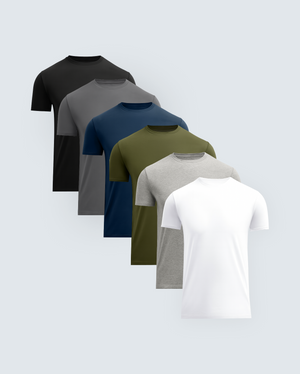
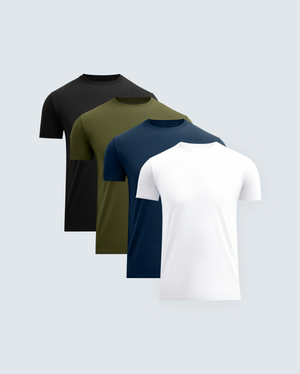
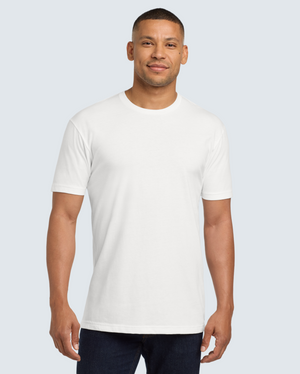
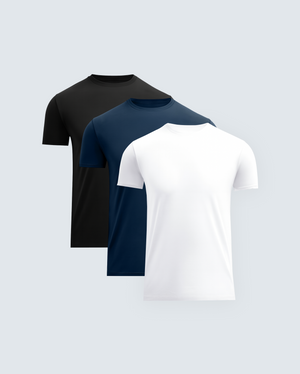

I read every review that comes in on our bamboo t-shirts because it's part of how I stay calibrated on what's actually working and what isn't, and the thing that keeps surprising me after two years of doing this isn't the star ratings or the generic 'great shirt' comments. It's the number of people who describe throwing out their cotton t-shirts. Not retiring them gradually to the bottom of the drawer. Throwing them out. Like once you wear bamboo for a few weeks, cotton goes from being fine to being actively annoying, and the reviews read less like product feedback and more like people processing a breakup with a fabric they'd been loyal to for decades.
We sell bamboo t-shirts and you know that, so anything we say about why you should buy one comes with a built-in grain of salt. That's fair and I'd feel the same way reading this on someone else's site. But here's the thing we can't manufacture: the reviews. Over 500 of them. And the pattern that keeps showing up isn't 'nice shirt, would buy again.' It's 'I threw out all my cotton tees.'
Key Takeaways
- Customers don't describe adding a bamboo tee to their existing rotation, they describe ditching their cotton ones entirely, and that full-wardrobe-replacement language shows up across enough independent reviews to be a pattern rather than a handful of enthusiastic outliers getting carried away.
- Over 80% of our bamboo tee customers reorder within a few months, which is roughly double the normal repeat purchase rate for a t-shirt category that typically sits around 30-40%, and a reorder happens after the novelty has worn off and after enough real days to form an actual opinion about the shirt.
- The features customers care about most in their reviews (softness that survives dozens of washes, odour management through warm days, drape that moves with you rather than clinging) aren't the features most bamboo brands lead with in their marketing copy, which tends to focus on sustainability messaging instead.
The quick answer: bamboo viscose genuinely performs differently from cotton in the three areas that matter for everyday t-shirts, which are softness retention over time, moisture management through a full day in warm weather, and how the shirt smells after eight hours against your skin. And the reorder rate of 80% or higher suggests this isn't first-purchase hype wearing off. If that's enough to convince you to try one, close the tab. For the specifics on what's actually different about the fabric and why cotton people keep switching, keep reading.
What Keeps Happening to Cotton After Six Months?
Nobody buys a cotton t-shirt and immediately thinks it's bad. Day one cotton is genuinely fine, and depending on the grade it can feel pretty good against your skin when it's brand new out of the packaging. The problem is that cotton has this slow decline built into the fibre structure itself, and it starts from the first wash even if you don't notice it until month three or four.
Cotton fibres fray at a microscopic level with every wash cycle because the irregular cross-section catches and snags during agitation. The surface gets progressively rougher. Colours fade because the dye sits on that rough surface and gets stripped gradually. And that shirt you genuinely liked in January starts feeling like a different (worse) shirt by July, and you keep wearing it anyway because you don't want to admit that a t-shirt has an expiration date. But it does. I've watched my own cotton tees go through this cycle enough times to stop being surprised by it.
Then there's the heat and moisture problem that nobody thinks about until they're living it. Cotton soaks up sweat and holds it against your skin like a warm damp compress because the fibre structure absorbs moisture rather than moving it anywhere useful. On a mild day this doesn't matter much. But on a warm day, by 2pm that cotton shirt is working against you, and warm wet fabric pressed against skin is exactly the environment bacteria need to produce odour compounds (NCBI, 2020).
Why Do Customer Reviews Keep Mentioning Cashmere?
This one genuinely caught us off guard when it started happening, because we definitely did not prime anyone to make luxury fabric comparisons. Liam B. compared the feel to cashmere. Oliver S. wrote that they 'feel like designer shirts.' And Logan H. said they still feel brand new after dozens of washes, which is the comment that actually matters most because it speaks to durability rather than just first impressions.
Here's why those comparisons keep happening: the fibre science is straightforward once you look at it. Bamboo viscose fibres have a round, smooth cross-section at the microscopic level that glides against skin. Cotton's cross-section is irregular and barbed, and those barbs are what create the slightly rough texture you feel when you rub cotton between your fingers. The round profile on bamboo produces that silky hand-feel, and because the surface is smooth it doesn't fray through washing the way cotton's irregular surface does.
Our blend is 70% bamboo viscose / 30% organic combed ring-spun cotton at 5.3 oz/yd2, and that ratio is specific to what we sell (other bamboo brands use different percentages and different cotton grades). But the cashmere comparison isn't flattery or exaggeration from enthusiastic customers. It's people reaching for the only reference point they have for fabric that feels genuinely expensive against bare skin, and landing on cashmere because nothing in their existing t-shirt drawer has ever felt like this before.
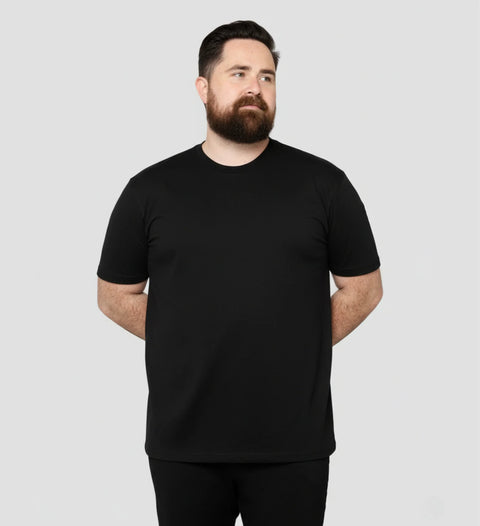
For guys with broader builds, the drape difference matters even more than the softness. Cotton tends to cling at the chest and stomach when you're warm because the fibres absorb moisture and grip. Bamboo's smoother fibre surface means the fabric moves with you rather than sticking, and we get asked about this constantly from customers in the L-XL range who've been dealing with cotton cling their entire adult lives without realising there was an alternative.
How Does Bamboo Handle Odour Differently?
Well, this is the one where I tested it myself because I got tired of just reading reviews about it. Last summer I wore a bamboo tee through a full Saturday of errands, moving furniture for a friend, and outdoor lunch in 30-degree heat. Did the collar sniff test when I got home. Nothing. Not clean-laundry-smell nothing, just actual nothing. Then I did the same routine the following weekend in a cotton tee (minus the furniture, which my friend owed me for anyway) and by mid-afternoon my wife told me I smelled like a gym bag.
It's not complicated once you understand the mechanism. Bamboo viscose contains bamboo kun, a naturally occurring bacteriostatic bio-agent in the fibre itself that inhibits the growth of odour-causing bacteria. And the fibre's micro-gap cross-section (Journal of Natural Fibers) wicks moisture outward to the fabric surface where it evaporates rather than holding it against your skin. So you get two things working together: drier skin that gives bacteria less to feed on, and a fibre structure that actively resists bacterial colonisation even when moisture is present. Our bamboo odour resistance guide covers the full science if you want the details.
Peter L. described his bamboo shirt as 'odour-free even after long days,' and he wasn't really describing what bamboo does. He was describing what his cotton shirts used to be like by comparison, and once you have that comparison point in your own experience the cotton tees start feeling like a problem you didn't know you had.
Bamboo vs Cotton: Side-by-Side
| Attribute | Bamboo Viscose Blend | Cotton |
|---|---|---|
| Softness on day one | Silky, cashmere comparisons common in reviews | Good to great, varies widely by grade and processing |
| Softness at month six | Holds well with cold wash routine | Declines noticeably as fibres fray at the surface |
| Moisture management | Wicks outward through micro-gap fibre structure | Absorbs and holds moisture against skin like a compress |
| Odour after a warm day | Bamboo kun inhibits bacterial odour in the fibre | Develops noticeable odour in warm weather by afternoon |
| Durability | Good with cold wash and proper care routine | Best overall, tolerates hot wash and rough treatment |
| Care requirements | Cold wash, no fabric softener, low heat or air dry | Anything goes without consequence |
| Price range | $30-50 per shirt | $15-35 per shirt |
| Reorder rate (our store) | Over 80% within a few months | Significantly lower across the category |
Sure, cotton wins the durability and care columns convincingly, and it wins the price column if you're counting dollars per shirt rather than dollars per comfortable wear. But bamboo wins the columns that determine whether you actually enjoy wearing the shirt at 4pm on a warm Wednesday, and that's the comparison that seems to drive the switching behaviour in the reviews.
The 80% Reorder Rate Is the Number That Matters
I get self-conscious about this part because it sounds like marketing copy, but the number is the number and I can't pretend it's not significant. Over 80% of customers who buy our men's bamboo t-shirts come back and order more within a few months, and normal repeat purchase rate for a t-shirt category sits around 30-40% across the industry.
Look, a five-star review captures a first impression and first impressions are easy to manufacture with good packaging and a nice unboxing experience. But a reorder happens after the novelty has completely worn off, after a dozen wash cycles, after enough genuinely normal days of wearing the shirt to form a real opinion that has nothing to do with excitement about something new. That's a harder signal to fake, and it's the one I pay more attention to than any individual review.
Our most common exchange pattern on bamboo is customers who sized based on their cotton size, found that bamboo's drape runs slightly different because the smoother fibre sits against the body differently, and swapped to their true fit after a quick exchange. After that first sizing adjustment, the reorder rate holds. People vote with what they buy next, and bamboo keeps winning that vote by a margin that cotton never matched in our store.
Who Actually Benefits Most from Making the Switch?
Over two years of watching the data, I've noticed that the customers who come back fastest and reorder most aggressively tend to share a profile. They wear t-shirts most days of the week. They wash frequently because they wear frequently. And they care about comfort through a full day in their shirt but don't want to spend any mental energy thinking about what they're wearing (which, honestly, describes most guys I know including myself).
Office workers who commute in summer heat, people who travel with carry-on luggage and need shirts that don't smell after a day on planes, anyone who spends time outdoors in warmer months and doesn't want to change shirts midday. That's the core switching audience, and those are the people whose reviews tend to be the most emphatic about ditching cotton entirely.
But bamboo isn't the obvious pick for everyone and I'd be dishonest if I pretended it was. High-intensity training where your shirt is going to be completely soaked? Technical performance synthetics are purpose-built for that specific demand. Budget-first shopping where every dollar matters? Cotton gives you more shirts per dollar and that's a legitimate priority. And formal settings where a t-shirt of any fabric is already the wrong garment choice? Skip both.
That full-wardrobe-replacement pattern in the reviews comes almost entirely from people in that wide middle ground of daily casual wear. Not athletes training hard. Not people who need dress shirts for work. Just people who wear t-shirts most days and got tired of the slow decline that cotton puts every shirt through after a few months of regular washing.
Two shirts is the starting point if you want to test the comparison yourself without committing to a full switch. Wear them alongside whatever cotton you already own for a couple of weeks and pay attention to how each feels at 8am versus 4pm, and how each smells at the end of a warm day. The bamboo odour guide covers how the moisture management works if you want to understand the science before buying, and the bamboo collection has the full range of colours and sizes.
Last updated: May 2026
FAQ
Is bamboo actually softer than cotton in a t-shirt?
On day one, bamboo feels noticeably silkier because the viscose fibres have a round, smooth cross-section that glides against skin rather than catching on it. After 30 washes the gap widens further because cotton fibres fray at the surface over time while bamboo holds its smooth profile. The cashmere comparisons in our reviews come from people who've owned the shirts for months, not just from first impressions.
Does bamboo hold up as well as cotton in the wash?
Better in softness and shape retention, as long as you follow the basics: cold water at 30 degrees, mild detergent, no fabric softener, and low heat or air dry. Fabric softener is the main thing that shortens bamboo's life because it coats the fibres and kills the breathability. Skip it and a bamboo tee outlasts cotton by a wide margin on softness retention.
Why does bamboo cost more per shirt than cotton?
The raw fibre is more expensive and the viscose processing adds manufacturing steps that cotton doesn't need. Most customers who've switched frame it as cost-per-wear rather than cost-per-shirt, and the maths works because bamboo holds up longer without the softness decline cotton goes through. The 80% reorder rate suggests most people reach the same conclusion.
Is bamboo good for sensitive skin?
Generally yes, and it's one of the most common reasons customers switch. The fibre surface is smoother than cotton at the microscopic level, which means less mechanical irritation against skin. Our bamboo tees are also tagless. The caveat: bamboo viscose is still chemically processed, so calling it naturally hypoallergenic overstates the science slightly.
Can bamboo replace all the cotton t-shirts in a wardrobe?
For everyday wear, travel, and casual office settings, bamboo covers everything cotton does while handling heat and odour better through a full day. For intense workouts, technical synthetics still have specific advantages. The full replacement pattern in our reviews comes from people in the daily-wear middle ground, not athletes or dress-shirt wearers.



0 comments