
Key Takeaways
- Cotton tanks are comfortable for moderate lifting with rest periods, but they absorb sweat and get heavy after about 30 minutes of real work. Performance polyester blends wick moisture and dry faster, which matters for HIIT, circuits, and sustained cardio.
- For overhead lifts and wide-grip work, a muscle tank with a deep armhole gives you the most range of motion. For cardio and dynamic movements like box jumps or burpees, a regular tank with wider straps stays put instead of flapping around.
- The single biggest mistake is wearing a gym tank that's either so loose it catches on equipment or so tight you can feel it pulling every time you raise your arms. Neither one helps your workout.
My first gym tank was a cotton one I'd been wearing around the house for two years before it ever saw the inside of a weight room. It was soft, it was comfortable, and about forty minutes into a circuit training session it weighed approximately twice what it did when I walked in. I could feel the thing getting heavier on my shoulders. By the end I was basically wearing a warm, damp towel with straps.
Bought a polyester tank the next week. Completely different experience. No clinging, no extra weight, dried out between sets. But it felt like wearing a grocery bag against my skin. Scratchy, plasticky, and I kept catching myself adjusting it because the armholes were cut in some shape that didn't match any part of my body.
So I learned the hard way what most guys eventually figure out: there isn't one perfect gym tank. What you're training for, how hard you go, and honestly how much you sweat all change which fabric and which cut makes sense. Here's the quick answer: cotton or cotton-blend for moderate lifting with rest periods, performance blend for high-intensity work, and the armhole depth depends on whether you're pressing overhead or doing box jumps. If that's enough, you're done here. For the breakdown of why and what to look for, keep reading.
Does the Fabric Actually Matter That Much?
Yeah. More than most guys want to think about, honestly.
Cotton breathes well and feels good against skin. Nobody's arguing that. But cotton is basically a sponge (the fibre is designed to hold moisture, which is great for towels and terrible for gym clothes). It absorbs sweat instead of moving it away from your body, and once it's saturated the shirt gets heavy, starts clinging to your torso, and the comfortable feel from minute one turns into a cold, wet second skin by minute forty. For a casual lifting session where you're resting a minute or two between sets and not really breaking a sweat until the last few exercises, cotton handles it fine. You'll never notice the moisture issue because you're not generating enough of it.
But for anything high-intensity, the fabric decision actually changes your workout experience. HIIT, sustained cardio, circuit training, anything that keeps your heart rate up for 20 or 30 minutes straight. Polyester-elastane blends wick moisture away from your skin instead of absorbing it. The sweat moves to the outside surface of the fabric and evaporates. You don't feel heavier as the session goes on. And the shirt dries out during your rest periods instead of just sitting there being wet.
The catch with polyester is the feel. Some guys genuinely can't stand synthetic fabric against their skin, and I get it (I was one of them for about three years before I found a blend I could live with). A cotton-poly blend, usually around 60/40 or 50/50, gives you something in between. Not as absorbent as straight cotton, not as plasticky-feeling as straight polyester. It won't excel at either job but it handles most gym scenarios without any complaints.
And then there's weight. Fabric weight, measured in ounces per square yard, changes how a tank drapes and how much heat it holds. A heavy 6-ounce cotton tank is going to trap more body heat than a 4-ounce performance blend. In a well-ventilated gym with good AC, doesn't matter much. In a basement gym in August with one box fan in the corner? That weight difference is the difference between finishing your workout and cutting it short because you feel like you're cooking.
Which Cut Works for What Kind of Training?
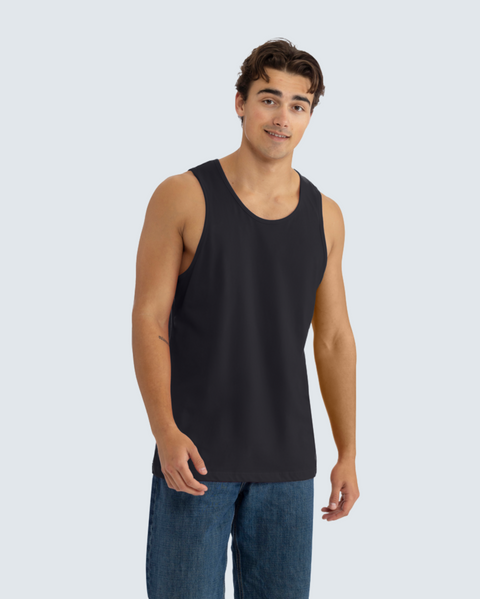
Muscle tank or regular tank. Deep armhole or standard. Here's when each one earns its spot in the gym bag.
For overhead pressing, pull-ups, lateral raises, wide-grip rows, anything where your arms go above your head or out wide, the muscle tank's deep armhole eliminates fabric interference at the shoulder joint. Research published in the Journal of Strength and Conditioning Research backs this up: material at the shoulder joint measurably limits overhead range of motion. So if your program involves a lot of overhead work, the deep armhole isn't just comfort, it's functional.
For bench press, curls, machine work, cable exercises, basically anything where your arms stay at or below shoulder height? Either cut handles it. The armhole depth makes zero meaningful difference at that range of motion, so grab whichever tank was on top of the pile that morning.
And for cardio, jumping, burpees, kettlebell swings, the regular tank actually has an edge. Wider straps mean more surface contact with your body, so the tank stays put during dynamic movements instead of shifting around. I watched a guy at my old gym doing box jumps in a muscle tank and the shirt was basically performing its own exercise beside him, catching air through the deep sides like a sail. His tank was getting more cardio than he was. Looked ridiculous.
How Should a Gym Tank Fit Through the Body?
Fitted enough to stay out of your way, loose enough to move freely. That's the whole guideline.
A gym tank that's too loose becomes a liability the moment you start working with barbells or cable machines. Excess fabric catches on knurling during deadlifts, gets pinched in cable attachments, and flaps around during anything explosive. And a gym tank that's too tight restricts your arms, rides up every time you raise them, and announces the outline of everything underneath in a way that most people don't find comfortable under fluorescent lighting.
Through the chest, the fabric should lay flat without stretching or pulling. If you can see tension lines across the front panel, size up. If the chest area looks like a small parachute with excess material pooling at the sides, size down. Through the torso, you want enough room that the fabric doesn't catch or cling but not so much that it moves independently of your body.
One thing nobody mentions: check the length before you train in a new tank. Raise both arms overhead and look at what happens at the hem. If your stomach makes an appearance above the waistband, the tank is too short for training. Doesn't matter how good the armhole or chest fit is, none of that counts if you're constantly fussing with the hem. You'll spend half your workout pulling the hem down between sets and the other half being self-conscious about it. We see this in our exchange data a lot with muscle tanks, because the tapered cut eats up body length even when the size chart numbers look the same as a regular tank.
What About Bigger Builds at the Gym?
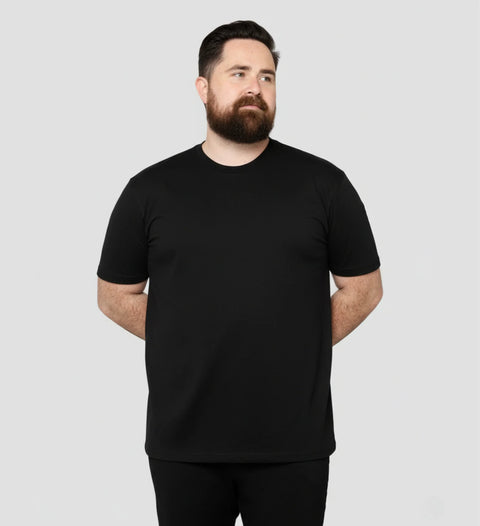
Most gym tank guides are written for guys who look like fitness models, and the advice falls apart the second you apply it to anybody who doesn't have that frame.
If you carry weight through the midsection, a muscle tank's tapered cut is going to pull across your stomach while the narrow straps dig into your shoulders. That's not a sizing issue. Going up a size just makes the armhole bigger and the shoulder wider without fixing the taper through the middle. A regular tank with a straight drop from shoulder to hem avoids this entirely because there's no taper to fight.
If you've got broad shoulders and a bigger chest, the armhole on a regular tank might feel too tight and restrict overhead movement before you even load the bar. In that case a muscle tank actually works well because the deep cut gives your shoulders room to operate, and the wider upper frame fills the cut the way it was designed to be filled.
And if you're on the leaner side, muscle tank armholes tend to gap open wider than they should, making the tank look three sizes too big through the sides even when the chest fits. A regular tank with a standard armhole sits closer to the body and reads as intentional rather than like an accident. The tank top fit guide covers specific measurements for all three scenarios if you want the exact numbers to check.
So What Should You Actually Buy for the Gym?
If you do a lot of overhead work and your build fills the cut, get a muscle tank in a performance blend. For general lifting across all muscle groups, a regular tank in a cotton-poly blend handles everything without any fussing.
Browse cuts and fabrics in the men's tank top collection. Each product page lists fabric composition, weight, and armhole measurements by size so you can match the tank to what you're actually training for instead of guessing.
Last updated: May 2026
FAQ
Is cotton or polyester better for gym tank tops?
Cotton is more comfortable against skin during moderate lifting where you're resting between sets and not drenching yourself. But polyester blends move sweat away from your body instead of soaking it up, which matters once you're doing anything that keeps your heart rate elevated for 20 or 30 minutes straight. For most guys who lift with rest periods, cotton handles it fine. For HIIT or sustained cardio, go synthetic.
Can you lift weights in a regular tank top instead of a muscle tank?
Yes, and most guys do. The tighter armhole on a regular tank does slightly limit overhead range of motion compared to a muscle tank's deep cut, but for bench press, curls, rows, and machine work your arms aren't going wide enough for the armhole to make a real difference. If overhead pressing is your main focus, the muscle tank has an advantage. For everything else, either one works.
What is the best tank top for a hot gym?
Open armhole for ventilation, lighter fabric weight so the material isn't holding heat against your body, and a cut that's loose enough for air to circulate. A muscle tank in a cotton-poly blend checks those boxes. More airflow through the deep sides, dries faster than straight cotton, and doesn't trap heat the way a fitted regular tank can in a gym with no air conditioning.
Should gym tank tops be tight or loose?
Through the chest, fitted but not stretching with every breath. Through the body, enough room to move without excess fabric catching on a barbell or cable handle. A tank that's too loose gets snagged during barbell work and flaps around during box jumps. A tank that's too tight restricts your arms and rides up when you raise them. The sweet spot is snug enough to stay in place and loose enough to forget you're wearing it.
Do you need a different tank top for cardio versus lifting?
Not really, but the ideal one is slightly different for each. A fitted regular tank stays in place better during running, jumping, and burpees because the wider straps and tighter armhole keep the fabric from shifting. A muscle tank gives you more range of motion for overhead lifts and wide-grip work. Most guys pick one and use it for both, which is totally fine.



0 comments