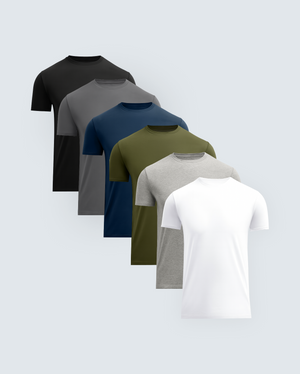
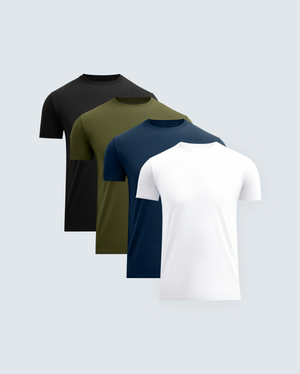
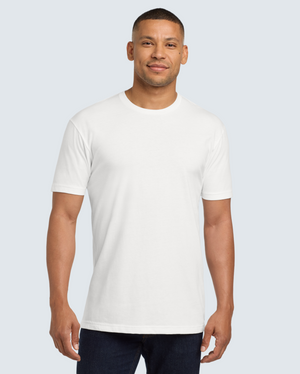
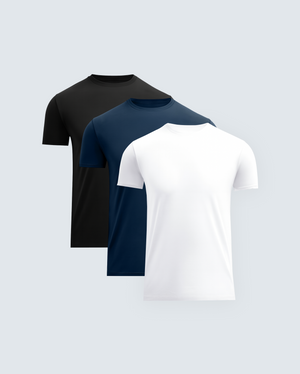

Introduction
Your t-shirt shouldn't cost the earth…quite literally.
Every time you get dressed, you're making a choice. And if you're reaching for another fast-fashion dump-tee, you might not realize the hidden environmental toll of that "basic" wardrobe staple.
But what if there was a fabric that felt better, lasted longer, and actually gave back to the planet? That’s the reason men’s bamboo t shirts are gaining popularity today. Let's understand how sustainable and comfortable this fabric is.
Why Bamboo Fabric Is the Future of Sustainable Men’s Fashion?
In the US market, sustainability is no longer a bonus feature. It is becoming a baseline expectation, especially among younger consumers. Men increasingly care about how products are made, how long they last, and whether they align with long-term values.
Here’s why Bamboo fabric is the preferred choice for eco-friendly fashion choices today:
Unparalleled Softness Super Power
Bamboo fabric has long and curved fibres with micro gaps that help with temperature regulation. So, when it's cold outside, it keeps you warm. But in summers, it allows air circulation, keeping you cool and fresh all day long.
Natural UV Protection for Everyday Exposure
Men don't think about UV protection beyond sunscreen at the beach. But the sun doesn't only matter when you're poolside. It's hitting your skin during your morning commute, lunch breaks, weekend errands, and every moment you're outdoors.
Bamboo fabric offers built-in defense you don't have to think about. It comes with 50 UPF protection that blocks up to 97.5% of harmful UV rays.
Grows Smart, Not Aggressive on the Planet
Unlike cotton, which demands thousands of liters of water and heavy pesticide use, bamboo is a remarkably self-sufficient plant. It grows fast on marginal lands. So, for the fashion industry, this is a highly scalable fabric.
Solves the Everyday Comfort Look Problem
If you could only own one sustainable piece, make it a bamboo t-shirt. Why? Because t-shirts are the workhorses of any wardrobe. Whether it's lazy Sunday, brunch, grocery shopping, or fun Friday at the office, a bamboo t-shirt can be styled for all occasions.
If it’s sustainable, it's going to be hell expensive! That’s a pre-conceived notion most people have. But bamboo defies that.
Bamboo T-Shirt vs Cotton T-Shirt: Which Is More Sustainable?
By now, you know the basics of bamboo fabric. But, is it more sustainable than regular cotton t-shirts? Let's find out:
|
Factor |
Bamboo T-Shirt |
Cotton T-Shirt |
|
Water Usage |
Minimal. It grows on rainfall alone |
2,700 liters per shirt (approx.) |
|
Pesticides & Chemicals |
None required for growth |
Heavy pesticide use in conventional farming |
|
Growth Speed |
Matures in 3-5 years; rapid regeneration |
150-180 days per harvest cycle |
|
Carbon Footprint |
Carbon-negative. It absorbs more CO2 |
Releases significant CO2 during production |
|
Softness |
Feels soft like silk and cashmere |
Soft, but can get rough over time |
|
Breathability |
Traps sweat and regulates body temperature |
Is breathable but takes time to absorb moisture |
|
Durability |
Long fibres that last longer with proper care |
Good, but prone to pilling and fading |
|
Antimicrobial Properties |
Natural odor resistance |
Requires chemical treatments for odor control |
|
Biodegradability |
Fully biodegradable |
Biodegradable (if organic and untreated) |
How Bamboo T-Shirts Reduce Environmental Impact?
Look, we're not going to guilt-trip you about your wardrobe choices. But the harsh reality is that fashion is a dirty business. It's the second-largest polluter globally. Water, air, and land are used as if there's no tomorrow.
The current generation is realising and avoiding brands that don't care for the planet. Switching to bamboo isn't some massive sacrifice. It's actually an upgrade…one that happens to be way better for the planet.
Less Water Down the Drain
Bamboo use 70% less water compared to cotton and other textiles. It grows on natural rainfall alone. You don’t even need to have irrigation systems.
So, when you choose bamboo, you're essentially taking a pass on draining freshwater resources. Simple switch, massive impact.
Minimal chemical usage
No harmful pesticides or artificial chemicals are needed to speed up the production. That means less soil damage and less groundwater contamination.
Faster growth, less land pressure
Bamboo as a plant, grows very quickly. In fact, it regenerates from its own roots and doesn’t need replanting after harvest.
A Smaller Carbon Footprint
From growing a textile to processing and then shipping a finished garment, the carbon footprint we leave is huge. And that's before you factor in how quickly cheap clothes get thrown into landfills.
Bamboo absorbs CO2 and infact produces 35% oxygen. It is one of the most eco-conscious fabrics to exist.
Does this single-handedly solve climate change? No.
Does it move the needle in the right direction without compromising what you actually want in clothing? Absolutely.
Conclusion
That said, the future of sustainable fashion isn't complicated. It’s built on innovation, simplicity, and environmental sustainability. Bamboo delivers it all. It feels better, performs better, and demands far fewer resources than traditional fabrics.
Every bamboo tee is a step in the right direction. And honestly? That's enough.
Ready to feel the difference? Check out ComfyThreads' men’s bamboo t shirts and see why guys are making the switch. One tee at a time.
FAQs
How comfortable is bamboo fabric for daily wear?
Bamboo is a very lightweight and breathable fabric that feels silky soft on the skin. The long and round fibres keep you comfortable throughout the day.
Does bamboo T Shirts last long?
Bamboo t-shirts are more durable than most fabrics. They resist shrinking, stretching, and pilling.
Is a bamboo T Shirt a good choice for sensitive skin?
Yes, its hypoallergenic quality helps people with sensitive skin wear it without worrying about itchiness feels.
n bamboo T Shirt be worn year-round?
Yes. Bamboo fabric helps regulate body temperature, keeping you cool in summer and comfortable in cooler weather.
Bamboo t-shirts also sit at the centre of the eco-friendly clothing conversation. If you're shopping specifically for sustainable and eco-friendly shirts, the sustainable clothing collection covers bamboo alongside organic cotton options with full transparency on materials and production methods.
For a complete breakdown of how bamboo fabric is made and how it performs day to day, see our guide to what bamboo fabric actually is and how it's made.
The natural odour resistance in bamboo viscose comes from bamboo kun, a bio-agent present in the fibre itself. Bamboo kun has bacteriostatic properties that inhibit the growth of odour-causing bacteria in the fibre. This is inherent to the bamboo viscose fibre structure, not a surface treatment, so the effect survives repeated washing rather than fading over time. ComfyThreads bamboo tees use a 70% bamboo viscose / 30% organic cotton blend at 5.3 oz/yd² — the cotton fraction adds tensile strength without reducing the breathability or antimicrobial properties of the bamboo portion.



1 comment
I’d get some of these, but I placed an order with y’all on December 12 that I still haven’t received. And I’ve been trying to get information on it. Nobody will get back to me. The shirt cost almost $50. I’d really like to get it.