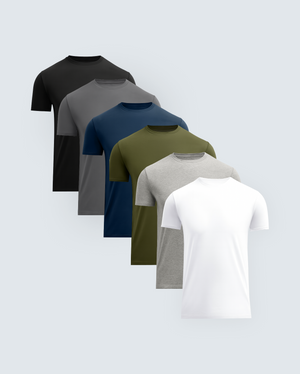
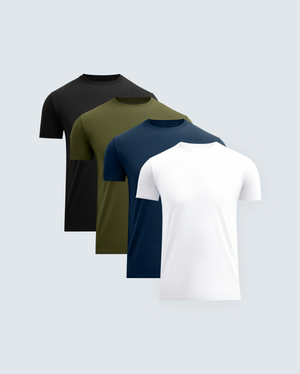
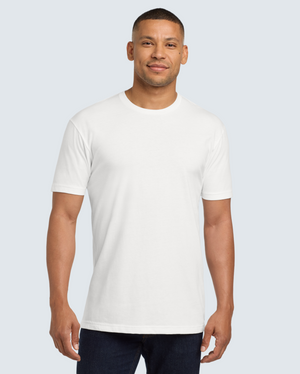
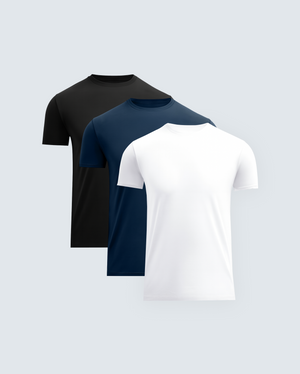

I read every review that comes in on our bamboo t-shirts. Every single one. It started as something I did to stay calibrated on what's working and what isn't, and at some point it turned into a habit I couldn't shake, like checking the weather app six times before leaving the house even though I know it's going to be warm. I've read north of 500 of them at this point. And the thing that keeps surprising me after two years of doing this isn't the star ratings or the generic "great product, fast shipping" comments that tell you absolutely nothing about the actual shirt. It's the number of people who describe throwing out their cotton t-shirts.
Not retiring them gradually to the bottom of the drawer. Throwing them out. Like something switched after a few weeks of wearing both side by side and the old shirts went from perfectly fine to actively irritating in a way they couldn't unsee.
Key Takeaways
- The most common language in our bamboo t-shirt reviews isn't "nice shirt" or "would recommend," it's full wardrobe replacement ("I replaced every cotton tee I owned"), which shows up across enough independent reviews to be a pattern rather than a few enthusiastic outliers getting carried away after a good unboxing.
- Softness retention is what customers mention most after owning the shirts for months, not softness on day one, because bamboo viscose fibres have a round, smooth cross-section that doesn't fray through wash cycles the way cotton's irregular fibre surface does, and the feel at wash 30 is roughly the same as wash one.
- Almost nobody in 500 reviews mentions sustainability, eco-credentials, or bamboo kun, which means the features bamboo brands put at the front of their marketing (us included, honestly) are essentially invisible to the people actually buying and wearing the shirts.
We sell bamboo t-shirts and you know that, so anything we say about why you should buy one comes with a built-in grain of salt. That's fair and I'd feel the same way reading this on someone else's site. But here's the thing we can't manufacture: the reviews themselves. Over 500 of them. And the pattern isn't "nice shirt, would buy again." It's "I threw out all my cotton tees." If that's enough to make you curious, the bamboo collection is right there. For the specifics on what's actually driving that reaction across 500 independent reviews, keep reading.
Why Do People Keep Saying They Threw Out Their Cotton?
John M. wrote: "I've replaced every other tee I had with these." Kim T.: "Replaced my entire cotton collection." And Liam B., who sounds like someone closing a chapter in his life: "Never going back to cotton again."
Not "great addition to the rotation." Full wardrobe replacement.
That specific language matters because it captures something a star rating simply can't. Sure, a five-star review happens in the first five minutes of ownership, and first impressions are easy to manufacture with decent packaging and a nice checkout experience. But throwing out your cotton shirts is a decision made after months of comparative wearing. You've lived with both fabrics through laundry cycles, through summer days where everything feels heavy by 3pm, through that specific moment in the afternoon where you reach into the drawer and notice your hand keeps going past the cotton to grab the bamboo instead. And THEN you decide the old stuff isn't worth the drawer space.
That's a harder bar to clear than tapping five stars on a prompt. And it shows up from enough separate people, using almost identical language independently, that I stopped treating it as flattery somewhere around review number 200 and started treating it as data.
Does the Softness Actually Last?
Logan H. wrote that his shirts "still feel brand new after dozens of washes." Versions of that observation show up across multiple reviews from people who've owned the shirts for months. Not days. Months.
Here's why that matters. Most of us have been conditioned by years of buying cotton to expect a slow decline. New shirt feels nice. Three months later it feels like the cloth your grandmother uses to dust the sideboard. We just accept that as how t-shirts work, because until you've worn something that doesn't decline, you've got no reason to think the decline is avoidable.
But it is avoidable. Cotton fibres have an irregular, barbed cross-section at the microscopic level, and those barbs catch and fray with every wash cycle (that's actually why cotton pills and roughens over time, though nobody ever tells you this when you buy the shirt). Bamboo viscose has a round, smooth cross-section (Journal of Natural Fibers) that stays smooth. After 20 washes, it feels roughly like it did after the first. Customers notice because they were bracing for the usual decline, and when it didn't arrive, they mentioned it.
Why Do Reviews Keep Comparing These to Cashmere?
This one genuinely caught us off guard when it started happening. Liam B. compared the feel to cashmere. Oliver S. wrote that they "feel like designer shirts that cost four times more." Nobody asked them to make those comparisons. Nobody prompted it.
Well, think about what's happening here. They aren't saying "better than my old Hanes." They're reaching past the entire t-shirt category and landing on luxury fabric as the closest reference point, because nothing in their existing drawer felt like this and cashmere is the only touch reference most people have for fabric that feels genuinely expensive against bare skin.
Our blend is 70% bamboo viscose / 30% organic combed ring-spun cotton at 5.3 oz/yd². That ratio matters and I think the 30% cotton content is part of why the cashmere comparison keeps landing, because it gives the fabric enough structure that it doesn't collapse into something flimsy the way some 100% bamboo viscose shirts can. (Sure, comparing a $35 t-shirt to cashmere sounds like marketing copy. I'd be sceptical too. But we didn't write those reviews, and the word keeps showing up from people who have zero reason to reach for it unless the feeling genuinely triggered the association.)
What About Odour?
Peter L.'s exact words: "odour-free even after long days." Bamboo viscose contains bamboo kun, a naturally occurring bacteriostatic bio-agent in the fibre itself, and the fibre's micro-gap cross-section wicks moisture outward rather than holding it against skin. The odour resistance guide covers the science. But the reviews don't talk about mechanisms. They just say the shirt doesn't smell at the end of a warm day, and their old cotton ones did.
What Nobody Talks About (and Why That Matters)
This is the humbling one.
Almost nobody in 500 reviews mentions sustainability. Almost nobody brings up eco-credentials or antibacterial properties. Bamboo kun is essentially invisible in the actual feedback.
And look, that stings a little. Because those are the things bamboo clothing brands (us included) tend to put right at the front of the pitch. Turns out, customers don't care enough about any of it to mention it when they're describing what the shirt is actually like to wear. The marketing angle that gets the most airtime in our industry is the one with the least presence in genuine customer language. I spent about a month sitting with that realisation before I figured out what to do with it, which was mostly to stop leading with sustainability in our own copy and start leading with what people actually talk about.
What they DO talk about: how the fabric feels against skin. Whether that feel survives washing. Whether the shirt handles heat and odour through a full working day without becoming something you want to peel off by five o'clock. Practical, daily-life stuff, not marketing-copy stuff.
What the Reorder Rate Actually Tells You
Over 80% of customers who buy our bamboo t-shirts come back and order more within a few months. Normal repeat purchase rate for a t-shirt category sits around 30 to 40% across the industry, which makes our number look like either a data error or a genuinely different product category. It's the second one.
I get self-conscious about quoting this because it sounds like something a marketing team invented in a meeting room. But here's why it matters more than any individual review: a reorder happens after the novelty has completely worn off. After a dozen wash cycles. After enough genuinely normal days wearing the shirt to form an opinion that has nothing to do with excitement about something new. First impressions are easy to manufacture with good packaging and a nice unboxing experience. Repeat purchases aren't.
Our most common exchange on bamboo is customers who sized based on their cotton experience, found that bamboo's drape runs slightly different (the smoother fibre sits against the body differently, so guys in the L-XL range sometimes adjust direction after the first order), and swapped to their true fit after a quick exchange. After that first sizing adjustment, the reorder rate holds steady. People vote with what they buy next. And bamboo keeps winning that vote by a margin cotton never came close to in our store.
Two shirts is the starting point if you want to test this yourself without committing to anything. Wear them alongside whatever cotton you already own for a couple of weeks and pay attention to how each feels at 8am versus 4pm on a warm day. And how each smells at the end of it. If the reviews are anything to go by, two is usually how the cotton drawer starts emptying out.
Last updated: May 2026
FAQ
What do customers say about bamboo t-shirt softness?
The same thing, over and over, in different words: the softness doesn't go away. Cashmere and silk come up as comparisons from people who've owned the shirts for months, not days. That isn't a first-impression review. That's someone reaching for the only reference point they have for fabric that still feels expensive against bare skin after 30 washes.
Do bamboo t-shirts really stay soft after washing?
According to the reviews, yes. Cotton fibres develop a rougher surface through washing because the irregular cross-section frays at a microscopic level with every cycle. Bamboo viscose fibres have a round, smooth cross-section that doesn't fray the same way. The softness at wash 20 is roughly the same as wash one. Customers flag this because it surprises them.
Why do so many bamboo customers reorder?
Over 80% come back within a few months, which is roughly double the normal repeat purchase rate for a t-shirt category. The reviews give the answer: the softness and performance held up through real use, not just the first week. A reorder is a harder signal to fake than a five-star rating because it happens after the novelty has completely worn off.
What do bamboo t-shirt customers not mention in reviews?
Sustainability, eco-credentials, antibacterial claims, bamboo kun. Almost nobody brings these up. Customers care about how the shirt feels against their skin, whether that feeling survives washing, and whether it handles heat and odour through a full day. The marketing angle most bamboo brands lead with is invisible in actual customer feedback.




0 comments