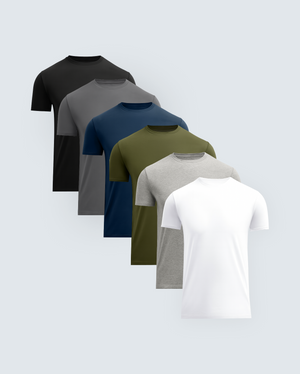
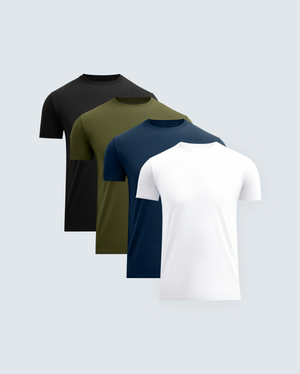
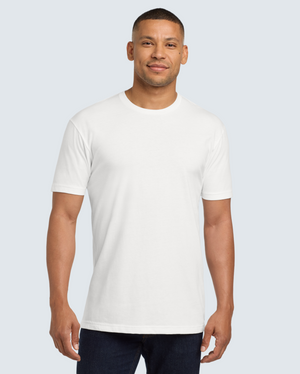
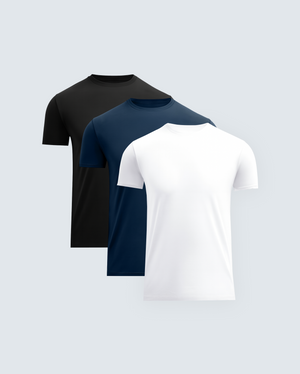

I'll just say it. Our bamboo t-shirts cost more than a cotton tee from most places, and I'm not going to dress that up with words like "investment" or "premium" or "elevated everyday essential" or whatever marketing has cooked up this quarter to make a price tag feel aspirational. The shirt costs more. The reason is genuinely boring. And whether it's worth it for you depends on how you actually use t-shirts, not on how I describe them.
Key Takeaways
- Bamboo t-shirts cost more because the raw fibre costs more to produce (bamboo viscose manufacturing has more stages than cotton milling) and the quality control during production is tighter, since the softness and durability depend on getting multiple steps right rather than one.
- The cost-per-wear calculation tends to favour bamboo for people who wear t-shirts regularly, because cotton degrades visibly over 6 to 12 months while bamboo viscose holds its softness and shape across significantly more wash cycles thanks to its smoother, rounder fibre cross-section.
- Over 80% of our bamboo customers come back and reorder within a few months. People who have actually worn both fabrics through real months of laundry keep choosing bamboo, and that reorder rate is a harder signal to fake than anything we could write here.
We sell bamboo t-shirts and you know that, so take what follows with whatever scepticism feels appropriate. But here's what we can point to that we didn't manufacture: the reorder data. And the reviews. And the exchange patterns. The bamboo collection is right there if you'd rather skip the explanation. For where the money actually goes and whether the maths holds up under scrutiny, keep reading.
Where Does the Extra Money Actually Go?
Two places, and neither one makes for exciting copy.
First, the raw material. Bamboo viscose production involves dissolving bamboo plant material in chemical solvents and regenerating it as a wearable fibre. That's more steps than cotton, which basically goes from field to ginning to spinning to fabric with infrastructure that's been optimised for centuries. Cotton is one of the oldest global commodities on earth. The supply chains are mature, the volumes are enormous, and the whole system is built to squeeze cost out of every stage. Bamboo viscose doesn't have that. Not yet, and maybe not for a long time, because the production scale isn't there and the processing chemistry is more involved.
Second, quality control during manufacturing. And this is the part that's easy to overlook because it's invisible in the finished product. The difference between a good batch of bamboo viscose fabric and a mediocre one comes down to getting multiple stages of the viscose process right. Shortcuts produce fabric that is technically bamboo viscose but doesn't have the softness or durability that makes anyone want to buy a second shirt. The controlled process that produces consistently good fabric, batch after batch, costs more than cutting corners and hoping each run turns out fine.
There's a third thing too, less discussed. Batch consistency. A fabric that feels different every time you buy it makes the product unreliable and kills repeat purchases. Cotton at commodity scale has this solved by sheer volume. Bamboo at smaller production scale requires active testing to maintain the same standard across runs. That testing adds cost. So does the rejected fabric that doesn't meet spec.
What Are You Actually Getting for the Extra Money?
The obvious answer is the softness, and sure, fine. But every bamboo brand says "soft" and the softness on day one isn't really the interesting part.
What gets interesting is what happens on day 90. And day 180. And after the 30th wash cycle, when you reach into the drawer and the bamboo shirt still feels like it did when you pulled it out of the package. Cotton doesn't do that. I don't mean cotton shirts fall apart in three months. I mean they gradually, imperceptibly start feeling like the cloth your nan uses to dust the sideboard. We've all done the thing where you hold onto a cotton shirt for sentimental reasons even though it has a hole near the armpit and feels like sandpaper against your neck. (Just me? No. Definitely not just me.)
Why does bamboo hold up? It's structural. Cotton fibres have an irregular, barbed cross-section at the microscopic level. Those barbs catch and fray with every wash cycle, which is actually why cotton pills and roughens over time. Nobody tells you this when you buy the shirt. Bamboo viscose has a round, smooth fibre cross-section (Journal of Natural Fibers) that doesn't fray the same way. After 20 washes, it feels roughly like it did after the first.
And then there's the moisture management. Bamboo moves sweat outward through the fabric via a micro-gap fibre structure rather than absorbing it and holding it against your skin, which is what cotton does. So the shirt stays drier through the day and you smell better by the end of it. The fibre also contains bamboo kun, a naturally occurring bacteriostatic bio-agent that inhibits the growth of odour-causing bacteria in the fibre itself. Peter L. described his shirt as "odour-free even after long days." The odour resistance guide has the full explanation.
Does the Cost-Per-Wear Maths Actually Work Out?
Maybe, and it depends entirely on you.
If you wear t-shirts 4 to 5 days a week, wash weekly, and replace your cotton shirts every 8 to 12 months because they've faded and thinned and generally given up on being presentable, the annual spend looks something like this: you buy cotton shirts twice a year, or you buy bamboo shirts once and they're still going strong at month 14.
Per-shirt price is higher for bamboo, and nobody's pretending otherwise. But if each shirt stays in good shape roughly twice as long (which is what happens with cold washing at 30°C and no fabric softener), the annual cost comes out similar. For some people it comes out lower. For people who machine dry everything on high heat and use fabric softener (which coats the fibres and degrades the moisture-wicking capacity), the durability advantage shrinks and the maths tilts back toward cotton.
So it's not a universal answer. It's a conditional one. Treat the fabric right and the numbers work. Treat it like cheap cotton and you've overpaid for something you could have bought for less.
The 80% reorder rate tells us most customers figure this out on their own. Kim T. replaced her entire cotton collection. John M. replaced every other tee he had. They didn't do that because we suggested it. They did it because the comparison over real months, through real laundry cycles, favoured bamboo by enough of a margin that keeping the cotton felt like wasting drawer space.
When Bamboo Is the Wrong Call (Yes, Sometimes It Is)
If budget is the priority and you're fine replacing shirts every few months, cotton gives you more shirts per dollar and that is a perfectly reasonable trade. Not everyone needs a t-shirt that survives 18 months of washing. Some people just need a t-shirt, and there is nothing wrong with that calculation.
If you need something for serious exercise, technical performance fabrics are purpose-built for high sweat output and rapid dry times that bamboo can't match. Bamboo handles everyday activity and warm weather well. It's not engineered for sprint intervals the way Dri-FIT or similar synthetics are.
And if you live somewhere cold and dry where you rarely sweat, the moisture management advantage shrinks to the point where you're mostly paying for softness and drape. Still nice. But merino or cotton fleece might make more practical sense for your climate.
I mention these because honesty about limitations is more useful than pretending bamboo is for everyone. It isn't. But for the people it IS for, it tends to become the only fabric they want to wear. That's the pattern my inbox keeps showing me.
What We Actually Sell (Since We're Being Direct About Everything Else)
Our bamboo t-shirts are 70% viscose from bamboo / 30% organic combed ring-spun cotton at 5.3 oz/yd² (roughly 179 gsm). That blend exists for a practical reason: 100% bamboo viscose is too slippery and doesn't hold its shape well enough for a t-shirt you want to look good after 20 washes. The 30% cotton gives it the structure the fabric needs. The bamboo gives it everything else.
My practical suggestion is the same one I give everybody. Try two shirts alongside whatever cotton you already own. Wear both types through your normal week. Do laundry. Repeat for a month. The comparison happens on its own and the conclusion tends to be pretty clear by week three. If you don't notice a difference, save your money and stick with cotton. Genuinely. We'd rather have honest customers who buy what works for them than buyers who feel pressured into something that doesn't fit their life.
Last updated: May 2026
FAQ
Why are bamboo t-shirts more expensive than cotton?
Two things drive the price gap. The raw fibre costs more to produce because bamboo viscose processing involves dissolving plant material in chemical solvents and regenerating it as wearable fibre, which is more stages than basic cotton milling. And the quality control during manufacturing is tighter because the softness and durability depend on getting multiple steps right. Cotton has been a global commodity for centuries with enormous infrastructure behind it. Bamboo viscose doesn't have that yet.
Are bamboo t-shirts worth the extra cost?
For people who wear t-shirts most days and wash them weekly, the maths usually works out in bamboo's favour. Cotton shirts degrade visibly over 6 to 12 months of regular washing. Bamboo viscose fibres have a round, smooth cross-section that doesn't fray and roughen through wash cycles the way cotton does. Over 80% of our bamboo customers come back and reorder within a few months, which suggests most people find the value holds up once they've actually worn both.
How long do bamboo t-shirts last compared to cotton?
With cold washing and air drying, a well-made bamboo shirt typically still performs near its original quality after 12 to 18 months of regular wear. A cotton shirt in the same price range has usually thinned out, lost softness, and developed that worn-rag texture by that point. The difference is structural: bamboo viscose fibres hold their smooth surface across wash cycles while cotton fibres fray and degrade.
Can you find cheaper bamboo t-shirts than ComfyThreads?
Yes, and the difference becomes obvious after 10 to 15 washes. Cheaper bamboo products often use lower-grade viscose processing or blend in polyester to cut costs. The softness might be there on day one but it fades faster because the fibre quality wasn't there to begin with. Our blend is 70% bamboo viscose and 30% organic combed ring-spun cotton at 5.3 oz per yard squared, and that ratio exists because it produces the best balance of softness, structure, and longevity we've found.
What's the cost per wear for bamboo versus cotton t-shirts?
It depends on how often you wear t-shirts and how quickly you replace them. Someone wearing t-shirts 4 to 5 days a week and replacing cotton every 8 to 12 months often finds that bamboo costs less per year despite the higher per-shirt price, because each bamboo shirt lasts roughly twice as long with proper cold washing. The 80% reorder rate among our bamboo customers suggests most people find the maths favourable once they've worn both fabrics through a real comparison.




0 comments